
Notes of Note #2
Sorry for the hiatus...

Round 1 of my thesis editing has begun. I have sent, with much trepidation and anxiety, my thesis to the first reader on my advisory board. I can only hope I don’t let their edits get to me! In other words: forgive my absence, I have been incredibly busy.
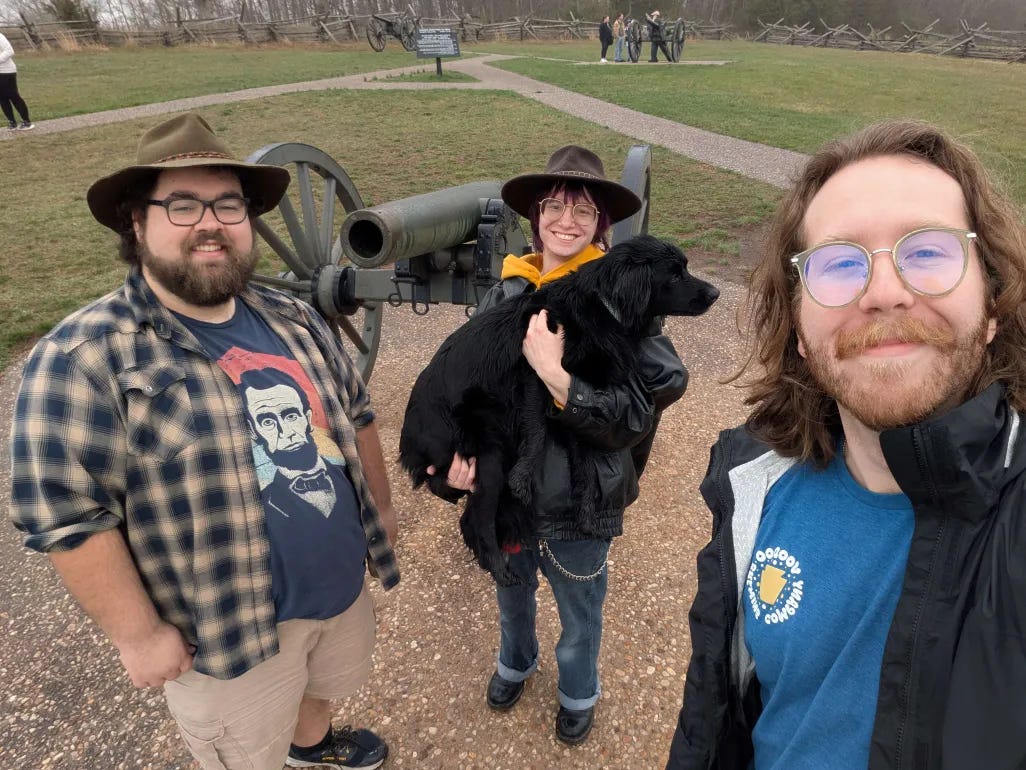
I still make time for my friends. Yesterday I enjoyed the pleasure of taking some friends on a tour around the battlefield at Gettysburg. It was a rainy, wet day. The air was thick with lingering moisture that clung to my beard. Fog raised high off the ground and obscured the near distance in an eerie haze that left the atmosphere feeling heavy, and all at once peaceful.
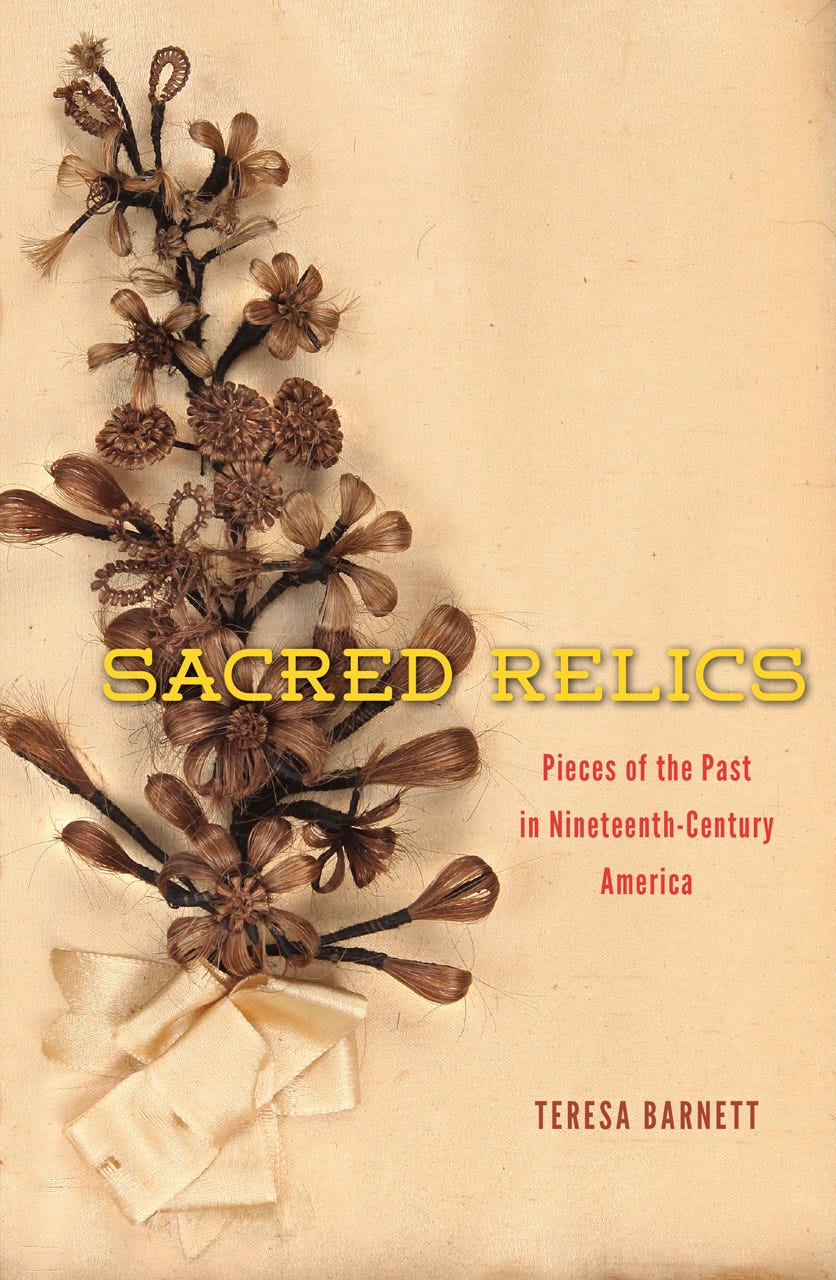
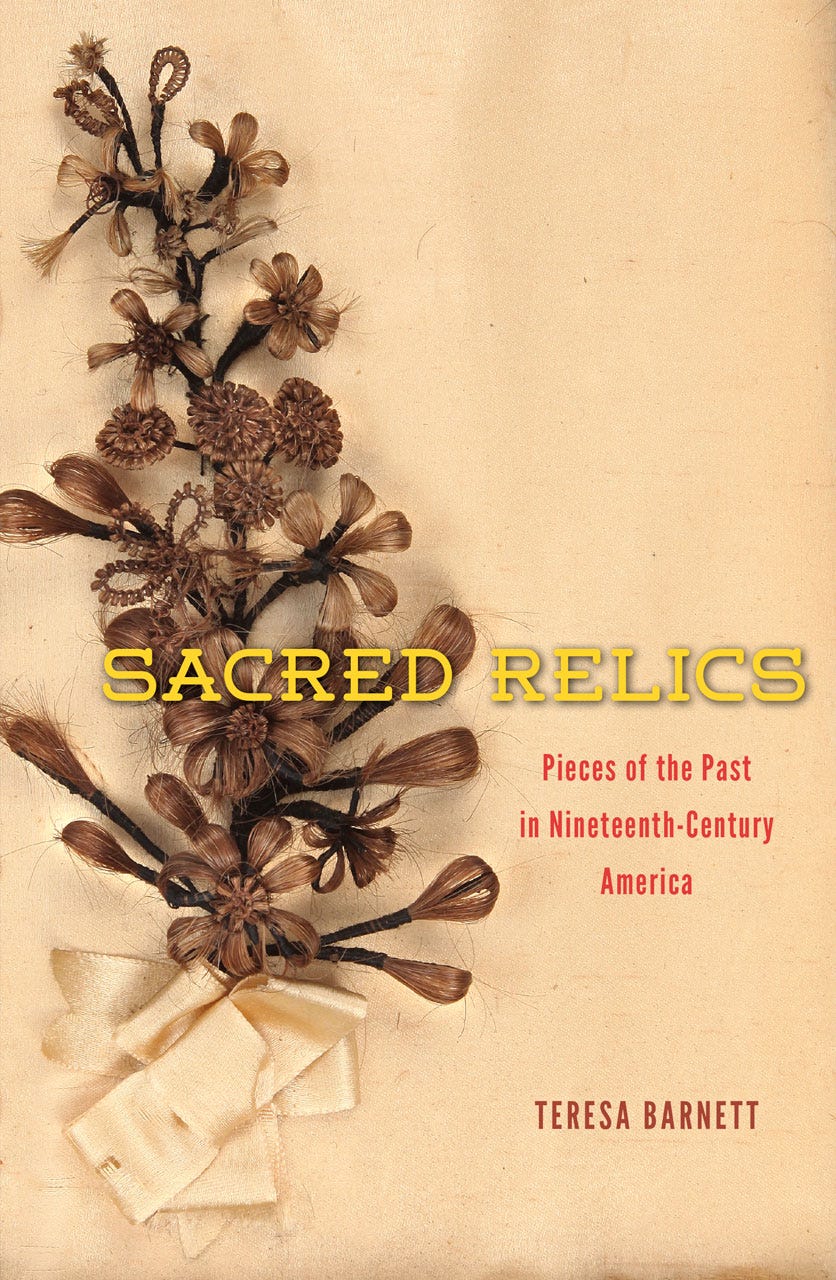
I recently finished Teresa Barnett’s Sacred Relics: Pieces of the Past in Nineteenth-Century America. The seriousness with which Barnett treats the topic of relics and mementos, not only in their material form, but importantly their emotional currency to 19th Century Americans made the work an inspiring read. As a scholar in American Studies that focuses on the abstract emotional connections Americans have with Place and Memory of the past, Barnett provided a wonderful example of how to talk about, and treat such a subject. It gave me a far deeper appreciation for a unique piece of the past I own: a 19th Century family Bible full of locks of hair and pressed flowers, (though I already held some reverence for it). I purchased this Bible for one dollar at a yard sale and recently flipped through every page. It was left exactly as it was in 1895: full of slips of paper and local advertisements, and locks of hair wrapped in small folds of paper, tied with small ribbons, or in once case, woven into a small net.
While largely un-inspiring, I read Tore Olsson’s Red Dead’s History which provides a historical overview of the 1890’s in America, but more so the historical influences the video game Red Dead Redemption 2 took from the American past. Olsson is critical, but offers praise to the game. His most interesting contributions come from his arguments about America’s “obsession with violence.” This ranging from its history, to its laws, to its culture. Olsson makes the point especially clear about the 19th century. While an interesting overview of late 1800’s America, it provided me nothing I didn’t already know. The power of Olsson’s work was in its ability to reach non-academic readers and present them with important, and critical context.
I have been slowly filling up the next volume of my diary. Encased in a navy blue Leuchtturm 1917, blank paper, hardbound notebook, I haven’t been keeping daily entries, but usually 2-3 times a week I will write in it. I lamented on its first page of how difficult it was to find nice, blank paper notebooks. Why is everything lined or dotted? Out of over 2,000 notebooks I scanned over at Barnes & Noble there were perhaps 15 or 20 that were blank paged. Either way, I am happy with it so far. The pages are light, but do not bleed easy from writing in ink, and their numbered corners help me keep track of my writing progress.
Meager it is, but I have been in thesis-land, so you must forgive my frankness, and the doldrum season of the year is still lingering with everyday a gray sky. Keep reading, friends!
Fascinating update as always! Curious if you've come across American Studies writer Slotkin. I think he has a book titled Gun Slinger (fighter?) Nation. I don't think it's a joke at like 800 pages but seems like he really takes a dive into the American ethos of 19th century bloodshed.